“AI” Statement
No “AI”
No “AI” tools were used in creation of content for this website. Everything is authored by me, unless explicitly credited in captions or citations.
What do you mean by “AI”?
I’m glad you asked! You might have noticed that I refer to “AI” in quotation marks. This is intentional. Language has power—it shapes stories and beliefs. In times of rampant erasure of truth, it’s vital to speak with intention. So let me set this straight:
“AI” (artificial intelligence) doesn’t exist. It’s a term that clouds known technologies (machine learning doesn’t sell well) in shrouds of mystery, promising intelligence and sentience where there isn’t one:
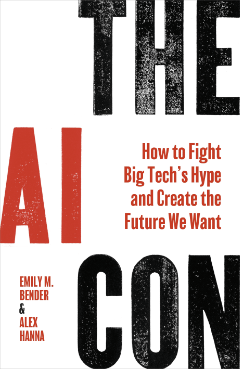
“'AI' is a marketing term. It doesn't refer to a coherent set of technologies. Instead, the phrase 'artificial intelligence' is deployed when the people building or selling a particular set of technologies will profit from getting others to believe that their technology is similar to humans, able to do things that, in fact, intrinsically require human judgment, perception or creativity.
The set of technologies that get sold as AI is diverse in both application and construction. The term serves to obscure that diversity, however, so the conversation becomes clearer if one speaks in terms of 'automation' rather than 'AI' and looks at precisely what is being automated.”
Emily M. Bender & Alex Hanna in The AI Con (Chapter 1)
Language has a role to play in disenfranchising the system of power behind “AI”. That’s why, when referring to these technologies in my writing, I’ll be following Emily M. Bender and Nanna Inie’s advice on talking about “AI” without adding to the anthropomorphisation (except this page).
I’ll also be as transparent as possible what specific tool I’m referring to (e.g.: image generation, classification algorithms, or automatic transcription).
Why not use “AI”?
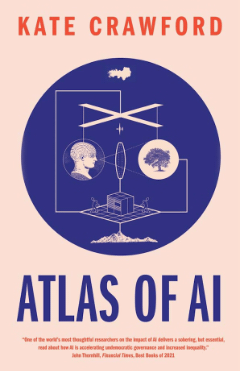
“Artificial intelligence is both embodied and material, made from natural resources, fuel, human labor, infrastructures, logistics, histories, and classifications. AI systems are not autonomous, rational, or able to discern anything without extensive, computationally intensive training with large data sets or predefined rules and rewards.
Artificial intelligence is a registry of power.”
Kate Crawford in Atlas of AI (Introduction)
When it becomes increasingly unsafe to have any other than unfettered enthusiasm stance in the workplace, here I’m in position to make my own judgments. Avoiding the use of “AI” is a conscious choice I’ve made through the lens of purpose and ethics.
Purpose
- Authenticity: This website is my digital home. The only place on the web where I have full freedom of self-expression. Giving up the opportunity to express myself to what average voice and tone sounds like goes contrary to what I see as personal.
- Learning: Experimenting, redesigning, and rebuilding this website taught me immeasurable lessons over the years. I want to keep cultivating critical thinking, growing knowledge, and ensuring my memory doesn’t atrophy.
Ethics
- Climate and sustainability: Our planet is facing an extinction-level threat—climate collapse. “AI” relies on multiple forms of extractivism: consuming insurmountable amounts of water, power, land, and minerals. It also raises pollution levels locally (and globally) moving us further away from climate targets.
- Worker rights: “AI” is at tension with labor protections, enabling widespread algorithmic bias, discrimination, employee surveillance, wage exploitation, and serving as an excuse for systemic mass layoffs. Ghost workers, job searchers, and those forced to use “AI” are all negatively impacted; especially so if they’re already underrepresented.
- Mass theft: Training corpuses for LLMs were created by scraping publicly available (often copyrighted) information with little to no legal repercussions. People’s lives and works used without any consent or pay, furthering inequality, eroding privacy, and threatening livelihoods.
- Technological colonialism: The new context of data dispossession adds to the picture of modern colonisation. Through epistemic dispossession, algorithmic bias, material extraction, labor exploitation in the Global South, “AI” follows the imperialism playbook.
- Misinformation and disinformation: “AI” can generate and amplify at unprecedented scale. It’s been proven to spread polarising content, directly threatening democracies worldwide. When facts are harder to discern, it becomes challenging to shape well-informed opinions, that are a bedrock of participatory democracy.
Recommended resources
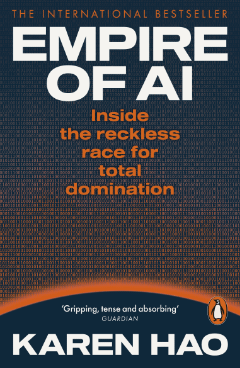
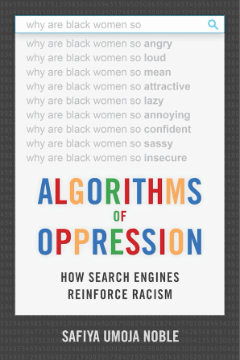
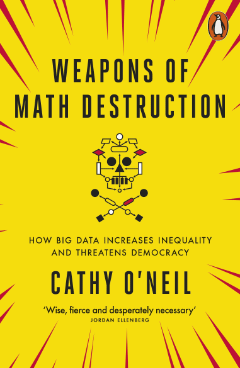
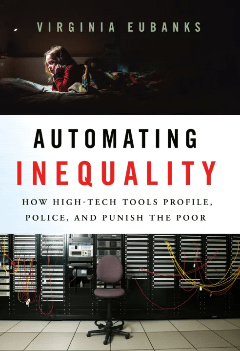
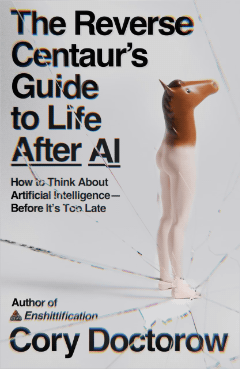
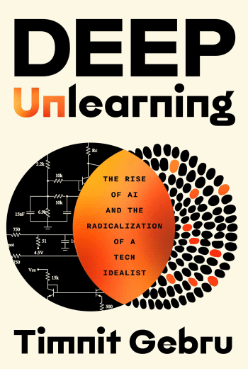
There are dozens of researchers, scholars and activists who informed my thinking. Here are a few books I’d recommend: